
5 Steps to Automate LinkedIn Post Timing
Learn how to automate your LinkedIn posts effectively in five simple steps to boost engagement and save time.
Automating LinkedIn posts saves time, ensures consistency, and targets peak engagement hours. Here's how you can do it in 5 simple steps:
- Pick a Tool: Use AI-powered tools like ContentIn, SocialPilot, or Agorapulse for scheduling and content creation.
- Set Up Your Profile: Link your LinkedIn account securely and configure settings like time zones and posting frequency.
- Plan Your Content: Create a content calendar with varied themes and align posts with peak times (e.g., 10–11 AM on Tuesdays and Thursdays).
- Schedule Posts: Use AI tools to optimize timing and bulk-schedule posts to maintain consistency.
- Analyze Results: Track metrics like engagement rates and peak times to refine your strategy.
| Tool | Features | Best For |
|---|---|---|
| ContentIn | AI writing, scheduling, analytics | All-in-one automation |
| SocialPilot | Multi-account management | Team collaboration |
| Agorapulse | Engagement tracking | Detailed analytics |
Start by selecting a tool, plan posts around your audience's activity, and use analytics to improve over time.
How to automate LinkedIn so it grows itself

Step 1: Choose Your LinkedIn AI Tool
Find an AI tool that combines smart scheduling and content creation to streamline your LinkedIn automation process.
Key Features to Look For
When selecting a tool, focus on these must-have features:
- Smart Scheduling: Tools that analyze your audience's activity and suggest the best posting times.
- Content Creation Support: Platforms offering AI writing help and ready-to-use templates to ensure high-quality posts.
- Analytics Integration: Detailed performance tracking to fine-tune your LinkedIn strategy.
| Feature Category | Key Capabilities |
|---|---|
| Scheduling | Auto-scheduling, Queue management, Time zone adjustments |
| Content | AI writing tools, Template library, Media support |
| Analytics | Engagement tracking, Performance metrics, Audience insights |
| Integration | LinkedIn API connection, Multi-account compatibility |
One tool that checks all these boxes is ContentIn.
Why ContentIn Stands Out
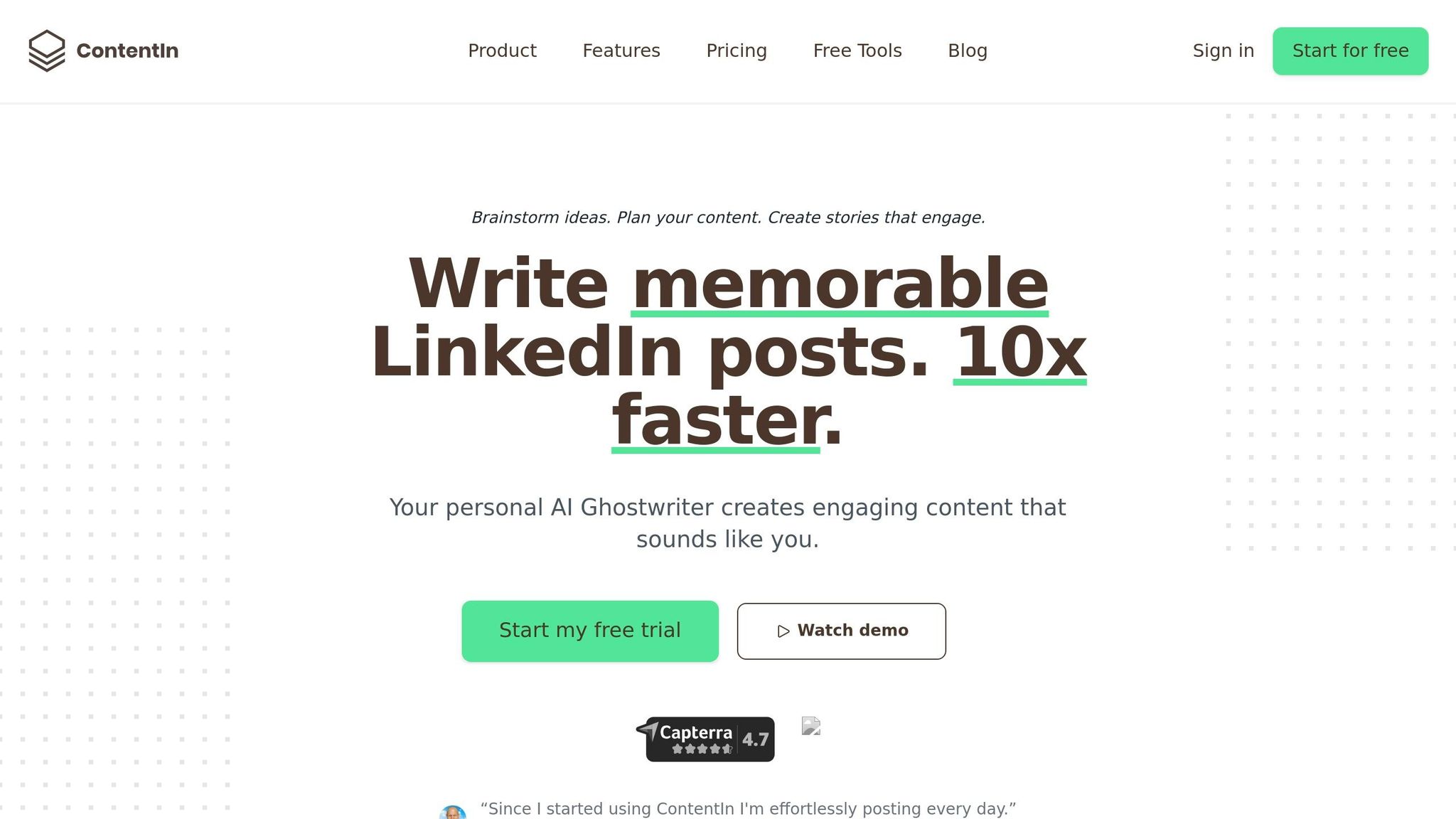
ContentIn simplifies LinkedIn automation with its all-in-one solution. Here's what it offers:
- AI Ghostwriter: Mimics your writing style for personalized content.
- Template Library: Access ready-made templates for quick post creation.
- Post Scheduler: Suggests the best times to post for maximum reach.
- Analytics Dashboard: Tracks how your posts perform over time.
- Idea Generator: Helps you plan and maintain a steady flow of content.
With ContentIn, you can handle both content creation and scheduling in one place. The goal is to automate the entire process, saving you time while keeping your LinkedIn audience engaged consistently.
Step 2: Connect and Configure Your Tool
Once you've chosen your LinkedIn automation tool, the next step is to set up your account and fine-tune the settings for the best results.
Link Your LinkedIn Profile
Follow these steps to securely connect your LinkedIn profile:
- Open the dashboard of your selected tool and find the "Connect LinkedIn" or "Add Account" option.
- Click to authenticate using LinkedIn's secure OAuth process.
- Carefully review the permissions being requested to ensure they meet your needs.
- Confirm the connection, and check that your profile is correctly displayed in the tool's dashboard.
Security Tip: Only approve permissions necessary for your activities. Trusted tools like ContentIn typically require access to basic profile details and posting functions.
Now, it's time to set up a posting schedule that aligns with when your audience is most active.
Set Up Post Schedule
Here's how to configure your posting schedule:
- Go to the scheduling settings in your tool.
- Set your primary time zone and enable smart scheduling to sync with your audience.
- Choose a posting frequency - starting with 3–4 posts per week is a good baseline.
- Let the tool's AI analyze your audience's activity patterns to suggest optimal times.
Pro Tip: LinkedIn users are generally most active during business hours. Schedule your posts between 7 AM and 4 PM in your audience's time zone to increase visibility.
If you're using ContentIn's scheduler, take advantage of its AI-driven timing optimization. It evaluates audience engagement trends and recommends the best posting times. Regularly tweaking your schedule based on performance data can help you reach more people and boost engagement.
sbb-itb-a899d56
Step 3: Build Your Content Plan
Now that your LinkedIn tool is set up and your posting schedule is ready, it's time to craft a content plan that drives engagement.
Set Up a Content Calendar
A content calendar helps keep your LinkedIn activity consistent and varied. Plan out themes for each day to ensure you're covering different types of content:
| Day | Content Type | Best Posting Time |
|---|---|---|
| Monday | Industry News | 9 AM - 10 AM |
| Tuesday | Educational Content | 10 AM - 11 AM |
| Wednesday | Case Studies | 1 PM - 2 PM |
| Thursday | Thought Leadership | 10 AM - 11 AM |
| Friday | Community Engagement | 11 AM - 12 PM |
Focus on peak LinkedIn activity times, like 10–11 AM on Tuesdays and Thursdays, to get the most visibility for your posts.
Pro Tip: Keep your calendar flexible so you can jump on trending topics while staying consistent with your schedule.
Brainstorm Post Topics
Once your calendar is outlined, align your post ideas with the best engagement times. AI tools can be a great resource for generating content ideas that fit your schedule.
Here are some categories that tend to perform well:
- Industry Insights: Share your take on current trends or expert analysis.
- Professional Development: Provide practical career tips or advice.
- Behind-the-Scenes: Give a glimpse into your work process or team culture.
- Success Stories: Highlight achievements or lessons from challenges you've overcome.
Time-Saving Tip: Use tools like ContentIn to quickly turn relevant articles into LinkedIn posts.
Leverage analytics to see which types of posts resonate most at specific times. This data can help you fine-tune your content strategy for better results.
Step 4: Schedule Your Posts
With your content strategy in place, it's time to plan a consistent posting schedule.
Research shows that weekdays between 7 AM and 4 PM are the best times for engagement. Here's a sample schedule to guide you:
| Day | Prime Time Slot | Content Focus |
|---|---|---|
| Monday | 10 AM | Start-of-week content |
| Tuesday | 10 AM - 11 AM | Industry updates |
| Wednesday | 3 PM | Educational posts |
| Thursday | 10 AM - 11 AM | Expert opinions |
| Friday | 11 AM | Community-focused posts |
For maximum impact, prioritize your most important posts on Tuesday and Thursday mornings, as LinkedIn activity often peaks during these times.
Leverage AI Timing Tools
Once your schedule is mapped out, take it up a notch with AI tools. Platforms like ContentIn's AI scheduler can help you refine your timing by analyzing:
- Engagement trends from past posts
- Your audience's time zones
- How different types of content perform
Start with the AI-recommended times, then tweak them as you gather more data. Use bulk scheduling to plan several weeks of posts in advance, ensuring consistent engagement while leaving room for timely updates.
Make it a habit to review your post performance each week and adjust your schedule based on what works best.
Step 5: Check and Improve Results
Use data to analyze how your posts are performing and tweak your LinkedIn schedule for better outcomes.
Review Post Analytics
Keep an eye on these metrics to measure how well your content is doing:
| Metric | What to Analyze | Why It Matters |
|---|---|---|
| Reach | Total views and impressions | Shows how widely your content is seen |
| Engagement Rate | Likes, comments, and shares | Reflects how much your audience cares |
| Click-through Rate | Link clicks and profile visits | Tracks how effective your content is at driving action |
| Peak Times | Best-performing time slots | Helps identify when your audience is most active |
Most LinkedIn automation tools have built-in analytics dashboards to help you track these metrics. For instance, ContentIn offers real-time insights powered by AI to help you constantly improve your approach.
Pro tip: Engagement rate is more telling than just raw numbers. For example, a post with 1,000 views and 100 engagements (10% rate) is more impactful than one with 10,000 views but only 500 engagements (5% rate). Use this to guide your decisions.
Update Posting Times
Refine your schedule using the data you've collected:
- Track Weekly Patterns: Look for consistent days and times that drive higher engagement.
- Try New Time Slots: Experiment with posting at different times to uncover untapped opportunities.
- Make Gradual Adjustments: Change your schedule in small steps and observe the results over a couple of weeks.
When analyzing your data, focus on:
- Time Zones: If your audience spans multiple regions, make sure your posts align with their active hours.
- Content Formats: Some types of content might perform better at specific times of the day.
Leverage AI tools to optimize your posting times. These tools analyze data to recommend the best times to reach your audience effectively.
Wrapping It Up
Key Points
Scheduling your LinkedIn posts effectively can be done in just five simple steps. The secret lies in choosing the right AI-driven tool and making the most of its features.
Here’s what you need for successful LinkedIn post automation:
| Component | Benefit |
|---|---|
| Tool | Saves you time |
| Profile Setup | Ensures smooth posting |
| Content Planning | Keeps things consistent |
| Schedule Creation | Boosts your visibility |
| Performance Review | Helps improve engagement |
Focus on these elements to level up your LinkedIn strategy right away.
What to Do Next
Start by exploring AI tools that fit your posting habits and content style.
Here’s a quick recap of the process: pick your tool, link your LinkedIn account, plan your posts, schedule them, and analyze the results.
Action Plan:
- Pick an automation tool and connect it to your LinkedIn profile.
- Set your posting schedule based on when your audience is most active.
- Use AI features to create your first week of posts.
- Schedule a few posts to see how the system works.
- Check the analytics after a week and tweak your approach as needed.
Create Engaging LinkedIn Content
Use ContentIn's AI Ghostwriter to write posts that resonate with your audience and build your personal brand effortlessly.